
Expansion to Germany



















Do you want to scale your company and expand to international markets in Germany, the EU or the DACH region? Our experts in German and EU law will clarify all your open legal questions and ensure a quick and legally secure implementation of your expansion strategy.
The 5 most important points for a successful expansion to Germany
Company form
Together with you we will find the best solution for your company form in Germany and the EU. We support you, for example, in founding a subsidiary, establishing a German limited liability company or setting up a branch office.
EU regulation
While the regulatory density in the EU is notorious, the uniform regulation allows for access to the entire EU market. Our team has experts in EU financial market law, data protection, AI and digital services to plan and implement an EU market entry.
Labor law and HR
Whether you are hiring employees, cross-border commuters or freelancers in Germany, German labor law is much more complex than Swiss labor law, not only in terms of protection against dismissal. With our HR experts, you can avoid costly mistakes.
Contract law and general terms and conditions
We incorporate the specifics of German general terms and conditions law and German contract law into your legal documents in a customized manner. With legally secure contracts that, for example, respect consumer rights including the statutory right of withdrawal, you can build successful business relationships in Germany.
Tax planning
Our tax experts are available to help you with questions about German and EU tax law and plan cross-border taxation between Switzerland and Germany.
Start the EU expansion with LEXR in 3 easy steps:
-
Free initial consultation
During the initial meeting, you will get to know our experts, they will usually be able to give you an initial assessment of the complexity for your company and your industry, as well as outlining the next steps.
-
Planning
Together we set goals, prioritize the most important topics and determine a schedule for your expansion into Germany and the EU. In doing so, we also take into account a possible time lag with authorities in order to carry out your expansion quickly.
-
Implementation
Based on the plan, we develop the most important legal documents, into which your feedback is constantly incorporated. Any newly arising legal questions will also be clarified by your personal contact person at our company.
Expansion to Germany FAQ
As part of the EU, the German market is generally more heavily regulated than the Swiss market. In Germany, as in the entire EU area, the rules imposed by the EU must be considered. However, what seems cumbersome at first also opens doors: due to the strict German regulation, expansion to other EU countries with less strict regulation is an easier step and oftentimes, the entire EU market can be served from Germany.
The most important issues that affect (almost) every company are data protection, consumer protection and competition regulations. In addition, there are industry-specific regulations, e.g., in the finance and insurance industry or concerning medical devices. You can find more details in our guide “Doing business in Germany“.
Intellectual property is protected in Germany very much in a similar way to Switzerland. The protection for trademarks and patents should be extended to the German region when expanding. In this way, the intellectual property can also be better exploited commercially, for example through licensing.
It should be noted that trademarks and patents are registered rights, rights registered in Switzerland are only protected in Switzerland. For protection on the German or European market, they must therefore also be registered in the respective German or European register. In Germany, the German Patent and Trademark Office (DPMA) is responsible for registering trademarks and patents.
In contrast, copyrighted works are also protected in Germany without any special application or registration. Copyright protection arises automatically with the creation of the work.
Technical inventions are most effectively protected by a patent application. This offers the broadest protection but is lengthy and requires the expert advice of a patent attorney. In addition, there is also the possibility of protection as a utility model, which is faster and cheaper than the patent application, but the protection is also less comprehensive.
In the B2B sector in Germany, caution should be exercised already when including general terms and conditions. The general terms and conditions of contractual partners automatically take precedence over the customer’s own terms and conditions if they are sent together with an offer, provided that the customer does not actively object to them. Furthermore, German courts often base their interpretation of GTCs in the B2B area on the consumer-friendly interpretation of GTCs from the B2C area. Accordingly, in the B2B area, it makes sense to declare Swiss law applicable, as it is less strict in terms and conditions law and allows for smoother trading.
In the B2C sector with German consumers, it should be noted that the less consumer-friendly Swiss law cannot simply be agreed on, the choice-of-law clause must indicate that the more favorable domestic law for the consumer also applies. General terms and conditions clauses are also subject to extensive review by German courts. German courts have developed comprehensive case law in this regard, which is why GTCs must be updated regularly.
Further differences exist in particular with regard to statutes of limitations and formal requirements (e.g., with regard to the assignment of claims, which in Germany can also be made by conclusive conduct).
Job descriptions need to be written with care. Failure to do so can quickly lead to unequal treatment, resulting in claims for damages and damage to the company’s image. Minimum wage regulations must be observed when planning the budget. The minimum wage also applies to interns, unless the internship is for training purposes. It is also possible to agree a probationary period of up to six months, during which notice of termination can be given by both parties with a shortened notice period of two weeks.
Numerous peculiarities apply to the drafting of German employment contracts. For example, fixed-term employment contracts must be signed in handwriting, otherwise they are deemed to remain valid for an indefinite period. When engaging freelancers, the risk of false self-employment is the biggest problem. If freelancers are later classified as employees by the German pension insurance fund, there is a risk of substantial back payments of social security contributions and taxes. Criminal consequences are also possible. In addition, certain professional groups are subject to blanket classifications as employees, which are difficult to disprove. The risk of false self-employment can be significantly reduced by carefully reviewing freelance contracts and the circumstances in which they are actually lived.
Compared to Switzerland, strict termination rules apply in Germany to companies with ten or more local employees. In such companies, any ordinary termination requires a legitimate reason, which can be operational, personal, or behavioral. In the event of a termination for conduct, an official warning must first be issued. Extraordinary termination should be well-considered as well as it also requires a legitimate reason, which needs to be carefully presented in the event of legal proceedings.
Every notice of termination in Germany must be signed by hand. Termination by e-mail, for example, would be invalid in Germany. In Switzerland, on the other hand, this is perfectly permissible.
For incentivizing employees, employee stock ownership plans (in the form of VSOP or ESOP) are commonplace also in Germany. While participation in the form of an ESOP (i.e., real shares) is still more prevalent in other jurisdictions, in Germany, virtual participation by means of VSOPs has come to prevail. A purely virtual shareholding has several advantages. First, when real shares or share options are granted, taxes and social security contributions are often already due at a point in time when no money has flown yet, for example, at the time of a change of employer. Virtual shares, on the other hand, are only taxable when a liquidity event occurs, and the employee receives cash. Secondly, exercising real share options is more time-consuming and costly because the transfer of German stocks and shares must be notarized.
We would be happy to support you in rolling out a German or cross-border employee stock option program.
About us
We’re a growing team of 35+ legal professionals. Some of our experts include:


** not a partner within the meaning of the PartGG / German Partnership Act

News and deals
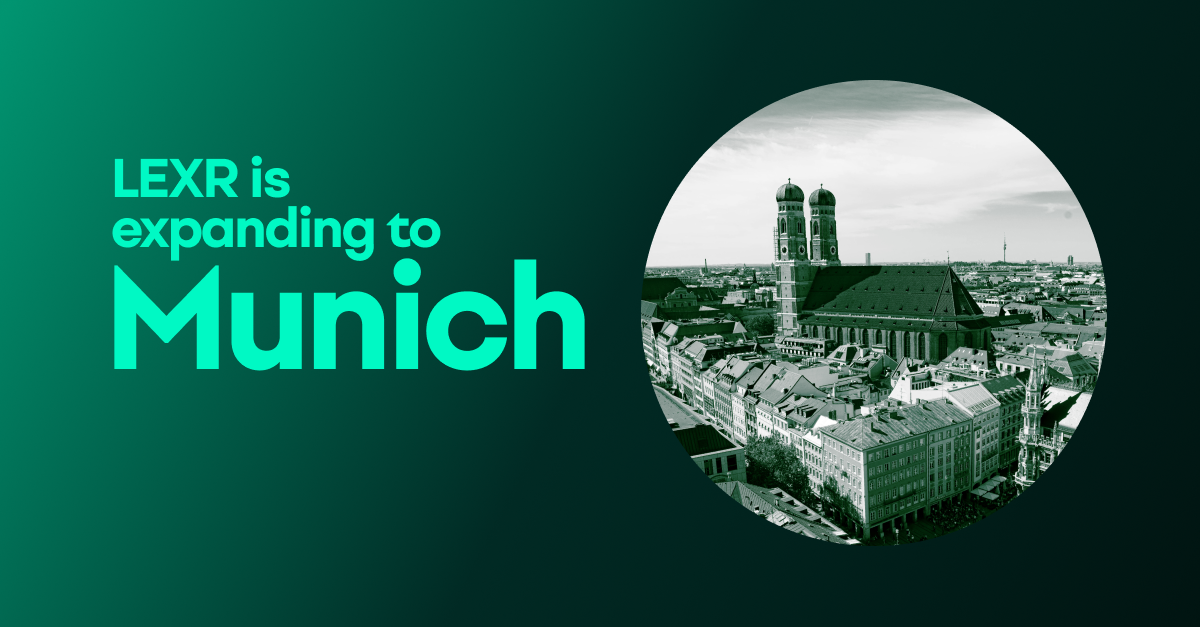 News International Legal Advice for Tech Companies: LEXR Opens Office in Munich Read more →
 Startups Establishing a U.S. Presence: Initial Considerations Read more →
 Startups Choosing the Right U.S. Entity: C-Corp vs. LLC for European Startups Read more →
 US Expansion Expanding to the US: Legal Essentials for European Tech Founders Read more →