
Your regulatory and digital capital market lawyers
FinTech and crypto regulation, data protection and AI. The rules that decide whether you can ship.


“I highly appreciate our partnership and collaboration with the LEXR team. They have supported us for the majority of our 5-year journey so far, growing from a crappy, early stage startup to a shiny, quickly expanding scaleup. Many topics around Regulation, Legal, Compliance, and Fundraising were far away from straight-forward and required an immense level of pragmatism and responsivity, which we were always able to count on. I can only recommend LEXR!”
Julian Liniger · Co-Founder & CEO, Relai




























Meet the regulatory team
 Christian Meisser Managing Partner
 Dr. Stephan D. Meyer Partner
 Thomas Kuster Partner
 Maximilian Krähenbühl Partner*
 Audrey Canova Managing Associate
 Andrin Hold Associate
 Yoann Garraux Managing Associate
 Nicoletta Iurilli Senior Associate
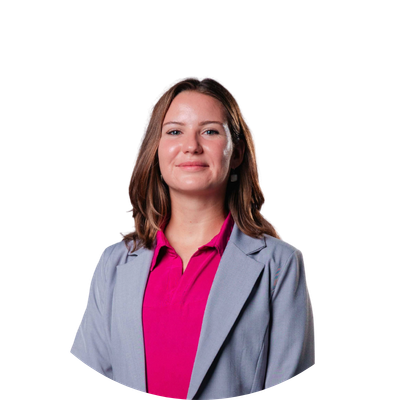 Irina Langenegger Senior Associate
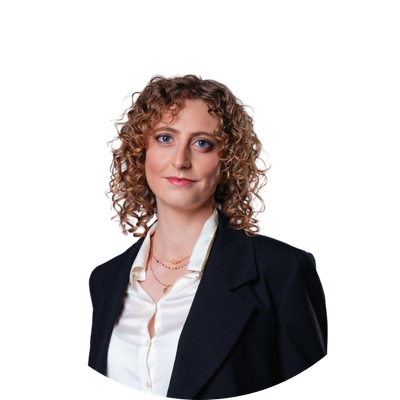 Aliena Trefny Junior Associate*
 Jan Pflug Junior Associate*
 Yves Roth Junior Associate*
* not registered at the bar
Why LEXR for regulation
Financial market licensing, end to end
From FINMA FinTech licenses and securities firm authorizations to SRO affiliation and CASP licensing under MiCA, we scope the trigger, build the file and run the process with the regulator. Most licensing questions should be answered before they become licensing projects.
Securities issuances, up to the listing
Whether listed at SIX Swiss Exchange or issued as a token from an offshore vehicle, we structure and document traditional and digital securities and take them all the way to market. As Authorized Representatives at SIX Swiss Exchange, we file listing applications ourselves instead of handing off at the exchange door.
Regulatory experts for DeFi and tokenization
Lending and staking protocols, DEXs, stablecoins, RWA tokenization: we assess how decentralized a setup really is and which regulatory perimeter it falls into, across Switzerland, the EU and beyond. We know where regulators have drawn the line, and where it's still moving.
Cross-border structures that hold up
Regulated products rarely live in one jurisdiction. We combine operating entities and issuance vehicles across established structuring hubs, so the setup works for the regulator, the investors and the tax adviser at the same time.
Lawyers for AI, who understand the technology
We classify AI systems under the EU AI Act, map the duties by risk tier and align GDPR and FADP compliance in the same pass. And because we build with AI ourselves, our advice reflects how these systems actually work, not just how the recitals describe them.
Switzerland, the EU and the US in one team
Swiss, EU and US regulation covered by one team: FINMA and SRO questions alongside MiCA, the AI Act and US market entry. One team, one file, no re-briefing a second firm at the border.
Global reach. Local roots. One team.

-
Brussels › Zurich
LEXR structures a tokenized tracker certificate and drafts EU prospectus for retail distribution
-
Zurich
LEXR advises BIT Asset Management on the SIX exchange listing of its Bitcoin ETF
-
London › Zurich
UK-based bank expands its digital assets offering to Switzerland with the legal advice of LEXR
-
Zurich
LEXR advises fast-growing robotics startup on autonomous vehicle regulation
Regulation FAQ
That depends on what you do with client assets and where your clients sit, not on what the product is called. Intermediating third-party assets triggers AML duties in essentially every jurisdiction; taking deposits, dealing in securities or custodying crypto-assets each point to their own authorization: FINMA territory in Switzerland, MiCA and national regimes in the EU, federal and state frameworks in the US. The same model can be license-free in one market and fully regulated in the next. Scoping that map at the outset is the difference between a filing and a remediation project.
Sometimes, and the answer differs by market and by how you reach the client. Some jurisdictions tolerate cross-border servicing from abroad within limits, others require a local entity or registration the moment you actively market there, and the line between passive and active is drawn differently everywhere. We map your target markets against your distribution model and tell you where you can operate as-is, where you need presence, and where the sequencing matters.
If you offer crypto-asset services to EU clients or market a token there, yes: MiCA follows the market, not your domicile. Providing services in practice requires an EU entity with a CASP authorization; offering a token publicly requires a notified white paper. Reverse solicitation is a narrow exception, not a distribution strategy. The design question is where to place the EU entity and how it interacts with your existing setup, not whether you can avoid one.
Yes. Tokenized bonds, funds and structured products have been issued at institutional scale for years, under Swiss, EU and offshore frameworks alike. The real questions are structural: which entity issues, from which jurisdiction, what prospectus or disclosure duties the offer triggers in each target market, and how settlement and custody satisfy your investors' mandates. Where a traditional listing is the better route, we cover that too, including as Authorized Representatives at SIX Swiss Exchange.
No regulator accepts the label at face value. The analysis looks at who exercises control: over the protocol, the interface, the fees, the upgrade keys. And whoever that is tends to sit inside a regulatory perimeter, whether under MiCA, national AML rules or US frameworks. We assess how decentralized a setup genuinely is, document the conclusion, and structure the parts that fall inside the perimeter so the parts that don't can stay there.
Where the regulation, the investors and the tax treatment converge, which is rarely a single country. A typical setup separates the regulated operating layer from the issuance or protocol layer, placing each entity in the jurisdiction whose regime matches what that entity actually does. We design and document these structures end to end, with one team across Switzerland, the EU and the US rather than a relay of local counsel.
Two layers apply at once: the EU AI Act reaches you as soon as your system or its output is used in the EU market, with duties scaled by risk tier, and your financial-market obligations don't pause because a model made the decision. Outsourcing, governance and accountability rules apply to AI-supported processes the same as to any other. We classify the use case, map both layers and fold data protection compliance into the same workstream.
Outsourcing rules and operational resilience regimes, FINMA's outsourcing requirements on the Swiss side, DORA for EU financial entities, reach any material function you hand to a provider, cloud included. That means contractual audit and access rights, exit strategies, a register of ICT providers and board-level accountability that stays with you regardless of what the SLA says. We negotiate the provider contracts against these requirements and build the governance documentation regulators actually ask for.
Before. Licensing triggers, disclosure duties and structural choices are cheapest to address while the architecture is still open; retrofitting a perimeter around a live product means remediation, regulator correspondence and sometimes a rebuild. A scoping assessment early on typically settles which markets you can enter as designed, which need an entity or authorization, and in what order.